6 Exercises Beginners Should Focus On in the Gym

New to the gym?
Welcome!
You’ve come to the right article, because there is a lot of hoopla out there that might distract you from the basics you need to know to get the results you want.
Now, I know you’ve probably set a goal to get a 6-pack by the time school starts next week, but let’s drop it for now.
If you’re new to the gym it’s extremely beneficial to develop a sound strength base.
From there, we can add all sorts of superficial goals – adding inches to the biceps, getting lats that flare out, a 6 pack you could shred a block of cheese on, etc, etc.
But for now, let’s cover 6 foundational movements that you, the beginner, should focus on for the first couple of months until you’ve developed some strength.
And if you want it all put together for you in an ideal beginner strength workout, I’ve got a surprise for you at the bottom of this article.
1. The Squat
This probably comes as no surprise to you and that’s the reason it’s number one on this list. The movement pattern of a squat, and perfecting that movement pattern is key to your long-term success.
This doesn’t mean you have to go straight for the back squat as a beginner. Aside from the fact that it can be intimidating for a lot of newbies (due to all the myths out there about how it can be bad for your knees – not true), not everyone is built to back squat with perfect range of motion.
Related: 5 Best Squat Variations for Building Leg Muscle
But, that doesn’t mean you shouldn’t focus on training the movement. By doing them, you’ll reap some serious long-term results. There’s a ton of variations out there:
- Bodyweight Squat
- Goblet Squat
- Landmine Squat
- Front Squat
- Box Squat
- Back Squat
Experiment a little and find the variation that best fits your body type and experience level and work towards perfecting it. That way when you move to more of a muscle building/hypertrophy phase, you’ll be better equipped to keep perfect form during those higher rep ranges.
2. The Deadlift
Next up on the list of things beginners should focus on more at the gym is the hip hinge movement pattern. The most common of the hip hinges? You guessed it, it’s the deadlift.
Like the squat, the deadlift is a total body movement pattern necessary to build optimal strength. And also like the back squat, the conventional form of deadlift isn’t for everyone.
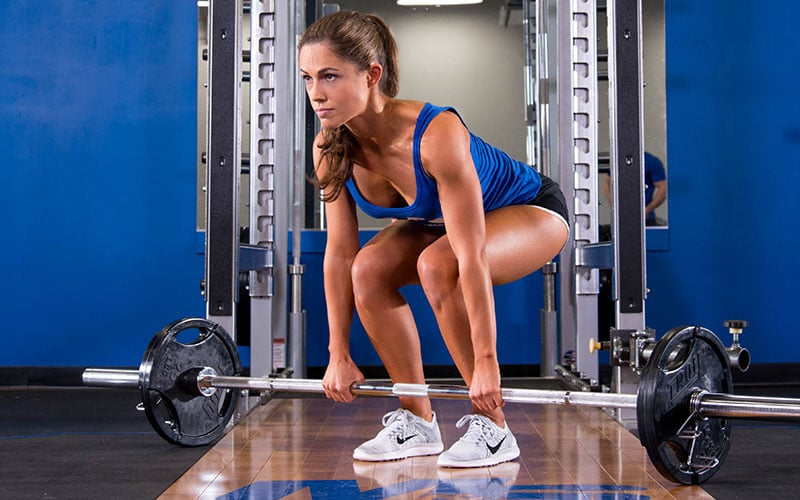
As a beginner, it takes some time to figure out which deadlift variation is going to be best for your experience level and body type. With that said, some popular go to’s are:
- Kettlebell Deadlift variations
- Dumbbell Deadlift variations
- Landmine Deadlift variations
- Trap Bar Deadlifts
- Sumo Deadlifts
- Conventional Deadlifts
We’ve got plenty of articles about how to alter deadlifts to make it perfect for you, check out some of these here:
- 5 Things You Don't Want To Hear About Your Deadlift
- Deadlift Domination: 5 Tips for 5 Plates
- 5 Reasons You Can't Deadlift More Weight (And How To Fix Them)
- Deadlifts Hurt Your Back? Here Are 4 Pain Free Alternatives
But the important thing is finding a variation or modifying the range of motion (by either elevating the weight or yourself) to make the movement fit your needs. The strength carry over you’ll gain from starting out with this movement will benefit you greatly in accomplishing your long-term goals.
3. Row
Up next on our list of things beginners should focus on is the row. The rowing movement is a compound movement that targets the entire back. And since it is also a horizontal pull, it limits the stress placed on the shoulder joint.
The row is going to be critical in any muscle building program you might use later on down the road, so training it correctly from the beginning of your fitness journey will help build an excellent foundation.
Personally, I’m a fan of starting off with a form of bent over rowing, but a lot of the rowing exercises you’re likely most familiar with are the cable and machine variations.
Some excellent forms of rowing you can include in your workouts as a beginner are:
- Standing Cable Row –this standing variation is excellent for beginners!
- Inverted Row
- Bent Over Barbell Row
- Bent Over Dumbbell Row
- T-Bar Landmine Row
Try varying your grip with these exercises, you’ll notice it shifts the area of the muscle being trained simply by going with a wider than normal grip or reverse grip.
4. The Pull Up
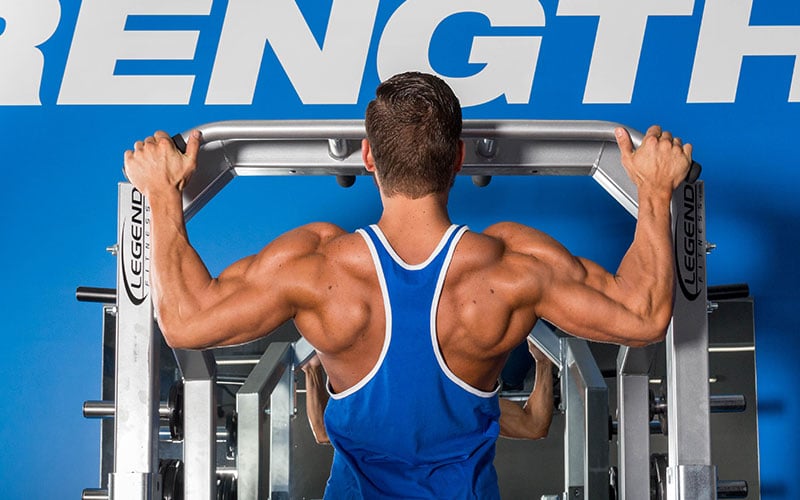
The vertical pull is another crucial movement pattern beginners should focus on. Most do so in the way of lat pull downs. And if that suits you best, go for it! However, nothing feels as accomplishing as being able to knock out a set of perfect range of motion pull ups.
Or chin ups – if that’s what you prefer. Regardless of the variation, being able to control your body during a vertical pull is highly beneficial.
And if you can’t quite perform pull ups yet (took me years), you should check out Lee Boyce’s article on pull up progressions here. Give it some practice, you’ll get there.
5. The Press
I’m going to lump press variations into one here, because honestly – beginners tend to focus too much on them. If you’re like me, starting off in the gym, it was all about getting my bench press up. Gotta get those pecs and delts huge – am I right?
The movement pattern is important, but variation and the amount of times you train the pattern each week is more important. You’ll get plenty of volume during your hypertrophy phases. For now, let’s work on perfecting the range of motion and finding the right exercise for each type that doesn’t kill our rotator cuffs.
When it comes to pressing, there’s two planes of motion. You’ve got horizontal presses (which are more chest focused) and vertical presses (which are more shoulder focused). You can probably get away with selecting just one of these movements every couple of days to start out with. Some variations include:
- Push Ups
- Barbell Bench Press (varying inclines)
- Dumbbell Bench Press (varying inclines)
- Barbell Military Shoulder Press (standing or seated)
- Dumbbell Military Shoulder Press (standing or seated)
You don’t need to get too complicated here. Simply try out each variation and figure out which works best for you with minimal shoulder stress and base your future workouts around them.
6. The Carry
The carry is my favorite full body exercise and one beginners can really benefit from. Performing them also has a major conditioning effect as it takes a significant amount of effort to carry a heavy load from point A to point B.
What do these look like?
- Farmers Walk
- Waiter Carries
- Suitcase Carries
Related: Concrete Core - 4 Core Workouts for Stronger Abs
Pro Tip: When you get advance enough, try doing a triset of all three – you’ll be bent over gasping for air, but this is a beginner article so don’t try it just yet.
Carries take complete cooperation from every muscle within the body to stabilize and walk. They’re well worth working into your beginner routine.
Putting it all Together in a Program
I promised it in the very beginning and I’m a man of my word. Try breaking these 6 movements into an A/B strength based program and perform them for 12 weeks.
You’re more than welcome to sub in any variation if you’d like. Journal each workout and take notes on how the movements feel as you do them. If you’re not shy, take some videos of yourself doing them so you can analyze your form.
Perform the workouts in an A/B fashion. You can either do them MWF, or if you’d really like to, you can do them every other day – A good progression would be to start off 12 weeks MWF followed by 12 weeks every other day.
Workout A
| Exercise | Sets | Reps |
|---|---|---|
| 1. Squat | 3 | 5 |
| 2. Row | 3 | 5 |
| 3. Military Press | 3 | 5 |
| 4. Farmers Walk | 3 | 20 yards |
Workout B
| Exercise | Sets | Reps |
|---|---|---|
| 1. Trap Bar Deadlift | 3 | 5 |
| 2. Pull Up | 3 | 5 |
| 3. Dumbbell Bench Press | 3 | 5 |
| 4. Farmers Walk | 3 | 20 yards |
Wrap up
Beginners tend to focus on superficial goals, but it is important that you start out on the right foundational foot.
This can be accomplished by incorporating these key movement patterns into your program early on:
- Squat
- Deadlift
- Row
- Pull ups
- Presses
- Carries
Focusing on healthy movement patterns on these key lifts will set you up for long-term success so you can accomplish all of your fitness goals (including that 6 pack you can shred cheese on).
Do you have any questions or other recommendations for beginners? Leave them in the comments section below so they can read them!