Boost Your Bench Press: The Ultimate Workout Plan to Increase Strength and Power

Despite all the advancements in fitness equipment and gym machines, the bench press remains the gold standard of upper body strength for athletes of all ages. Whether you're lifting for performance, physique, or pure pride, improving your bench press is a worthy goal.
For many, the journey begins with one question: "How much do you bench?" And while ego might play a part, the bench press is one of the most effective compound lifts for building strength, muscle mass, and even athletic power. In fact, some research suggests a link between bench press strength and punching power.1
No matter your reason, we’re here to help you boost your bench press with the best form tips, common mistakes to avoid, accessory movements, and a focused workout plan. So the next time someone asks, “What do you bench?” you can answer with confidence and power.
Recommended: Need help building muscle? Take our Free Muscle Building Course!
Bench Press Gains: What to Expect
If you're new to the gym, expect gains up to 20 pounds in 10 weeks following this plan. More experienced lifters or those stuck in a plateau can still see a solid 5–10 pound increase in that same window.
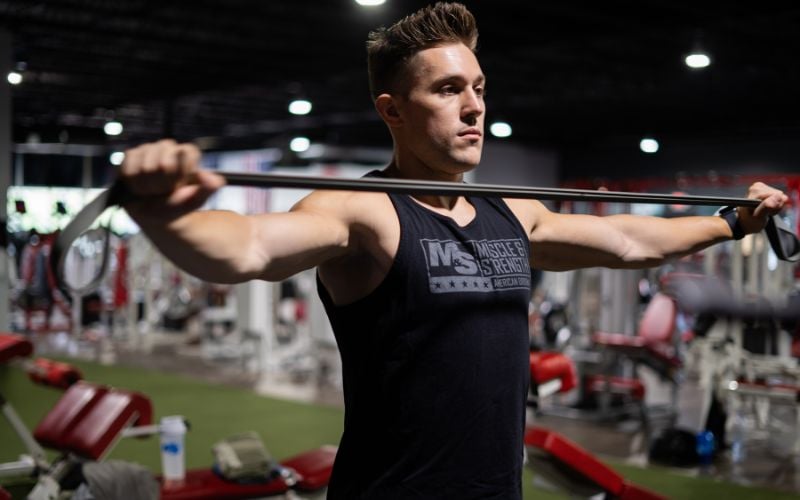
Avoid These Bench Press Mistakes That Kill Progress
Before diving into the how-to, let’s talk about the what-not-to-do. Avoiding these bench press mistakes is crucial for progress and injury prevention.
1. Poor Bench Press Form and Grip
Every rep should follow this pattern: a controlled descent, a brief pause on the chest, and an explosive press to lockout. Bouncing the bar off your chest is dangerous and counterproductive. It’s more momentum than muscle.
- Full range of motion is essential. No half reps.
- Grip should be slightly wider than shoulder-width, with both hands evenly spaced using the barbell knurling rings.
- Avoid the false grip (suicide grip). Always wrap your thumb around the bar to prevent slips and serious injury.
2. Neglecting Supporting Muscles
The pecs aren’t the only muscles doing the heavy lifting. Your front delts, triceps, and lats play huge roles in bench press performance.
Want to press more? Train your back. A strong upper back creates a stable base for heavy pressing, which is why elite benchers prioritize rows, pull-downs, and pull-ups.
3. Skipping Progressive Overload
To increase your bench press, you need to challenge your muscles with progressively heavier weights. This principle, known as progressive overload, drives muscle growth and strength.
You can implement overload by:
- Adding more weight
- Increasing reps
- Improving technique and tempo
4. Ignoring Recovery
Recovery isn't just about supplements. It's about sleep, nutrition, hydration, and active rest. Skipping any of these slows progress and increases your risk of overtraining or injury.

Bench Press Form 101: How to Bench Press with Proper Technique
Mastering proper bench press form is essential, not just for adding weight to the bar, but for staying safe while doing it. Each part of your setup and execution plays a role in your ability to lift efficiently and avoid injury. Here's how to bench press correctly, step by step.
1. Bench Press Setup
Lie flat on the bench with your eyes directly under the bar. Plant your feet flat on the floor for a solid base. If they don’t reach, use weight plates or blocks.
Retract your shoulder blades by pulling them together and down. This creates upper back tightness and protects your shoulders. Your lower back should arch slightly, and your glutes must stay on the bench throughout the lift.
2. Grip and Bar Path
Grip the bar slightly wider than shoulder-width. Use the knurling rings to make sure your hands are even. A wider grip targets the chest more; a closer grip hits the triceps. Choose a comfortable middle ground.
Unrack the bar and bring it over your chest. Lower the bar in a controlled path to your nipple line or slightly below. Keep your elbows tucked, don’t let them flare. Pause briefly at the bottom for a clean, momentum-free rep.
3. The Press
Drive the bar upward in a slight arc, up and back toward your starting point. Press with power, exhaling as you extend your arms fully. Lock out under control, reset, and repeat.
Use this form every time you bench, whether warming up or going heavy. Proper bench press technique builds strength, prevents injury, and sets the foundation for long-term progress.
Best Accessory Exercises to Increase Your Bench Press
To build a bigger bench press, you need more than just pressing. Accessory exercises target the muscles that support your bench, especially your triceps, shoulders, and back. Strengthening these areas improves stability, control, and lockout power. Skip accessory training, and your bench will stall. These accessory lifts are essential for progress.
Overhead Press
The overhead press builds shoulder strength and upper-body stability, both essential for driving the bar through the mid and top portion of the bench press. A stronger overhead press usually means better pressing mechanics overall.
Skull Crushers & Triceps Pushdowns
Your triceps are responsible for the final phase of the lift—the lockout. Skull crushers and pushdowns isolate the triceps and improve pressing strength when your chest and shoulders fatigue.
Bent-Over Rows
Rows develop upper-back thickness and help stabilize your body on the bench. A stronger back means more control over the bar and a solid base to press from.
Pullups or Lat Pulldowns
Your lats help guide the bar on the descent and assist with bar path control. Pull-ups and pull-downs build lat strength, reduce shoulder strain, and improve your overall bench press performance.

Boost Your Bench Press: The Ultimate Workout Plan to Increase Strength and Power
To boost your bench press, you need more than random sets of heavy reps, you need a structured plan. This four-day bench press workout routine is designed to improve strength, technique, and overall upper body development while minimizing burnout and overtraining.
Remember, this is not a bodybuilding program. So, you won’t see the same number of exercises and sets for some body parts as you would for a traditional hypertrophy program. The goal for this is to maximize your bench press while supporting total-body strength.
Weekly Structure:
- Day 1: Heavy Bench Day - Focused on low-rep, high-intensity pressing
- Day 2: Lower Body Day
- Day 3: Light Bench Day - Emphasizes speed, form, and technique
- Day 4: Upper Body
- Day 5 (Optional): Lower Body Day
Before you begin: Test your 1-rep max using proper form. If you already know your bench max, then use that number to calculate the percentage of weight to use on the heavy bench days.
If you're unsure how to safely test it, use our Bench Press Calculator to estimate your max based on rep and weight data.
Day 1: Heavy Bench Day
Follow the chart to determine your weights for heavy bench days. Use challenging weights for the remaining exercises.
| Exercise | Sets | Reps | Rest |
|---|---|---|---|
| Barbell Bench Press | 5 | 1-4 (see chart) | 90-120 sec |
| Overhead Barbell Press | 3 | 4-6 | 60 sec |
| Bent Over Row | 3 | 4-6 | 60 sec |
| Pull Up | 3 | 4-6 | 60 sec |
| Skull Crushers | 3 | 4-6 | 60 sec |
| Cable Triceps Extension | 3 | 4-6 | 60 sec |
Chart for Heavy Bench Press Day
- Week 1 – 75% of max for 4 reps
- Week 2 – 80% of max for 3 reps
- Week 3 – 85% of max for 2 reps
- Week 4 – 90% of max for 1 rep.
- Week 5 – Test Your Max
- Week 6 – 75% of new max for 4 reps
- Week 7 – 80% of new max for 3 reps
- Week 8 – 85% of new max for 2 reps
- Week 9 – 90% of new max for 1 rep.
- Week 10 – Test Your Max
Day 2: Lower Body Day
This is a classic workout structure you can perform at your own pace with manageable weights. Avoid going too heavy.
| Exercise | Sets | Reps | Rest |
|---|---|---|---|
| Squat | 3 | 8-12 | 60-90 sec |
| Leg Press | 3 | 8-12 | 60-90 sec |
| Hip Adduction Machine | 3 | 8-12 | 60-90 sec |
| Romanian Deadlift | 3 | 8-12 | 60-90 sec |
| Leg Curl | 3 | 8-12 | 60-90 sec |
| Standing Calf Raise | 3 | 8-12 | 60-90 sec |
| Ab Crunch | 3 | 15 | 60-90 sec |
Day 3: Light Bench Day
This day focuses on technique and bar speed. The goal is to lower the weight on the bar, pause, and press as quickly as you can. Perform paused triples at 50% of your max, pressing explosively. For the remaining exercises, use moderate weights and avoid training to failure.
| Exercise | Sets | Reps | Rest |
|---|---|---|---|
| Barbell Bench Press | 8 | 3 | 30 sec |
| Incline Dumbbell Bench Press | 3 | 8-12 | 60-90 sec |
| Lateral Raise | 3 | 8-12 | 60-90 sec |
| Overhead Tricep Extension | 3 | 8-12 | 60-90 sec |
Day 4: Upper Body Day
This workout targets the rest of your upper body. Use challenging, but manageable, weights. You should leave feeling worked, not drained.
| Exercise | Sets | Reps | Rest |
|---|---|---|---|
| Wide Grip Lateral Pull Down | 5 | 8-12 | 60-90 sec |
| Seated Row | 3 | 8-12 | 60-90 sec |
| Bent Over Dumbbell Reverse Fly | 3 | 8-12 | 60-90 sec |
| Front Raise | 3 | 8-12 | 60-90 sec |
| Barbell Curl | 3 | 8-12 | 60-90 sec |
| Hammer Curl | 3 | 8-12 | 60-90 sec |
| Lying Leg Raise | 3 | 15 | 60-90 sec |
Day 5: Lower Body Day (Optional)
This optional day is designed to improve unilateral strength through single-leg exercises. Add it if you want to dedicate extra time to lower body development. Training one leg at a time helps correct muscle imbalances, improves stability, and can enhance overall athletic performance.
| Exercise | Sets | Reps | Rest |
|---|---|---|---|
| Deadlift | 3 | 8-12 | 60-90 sec |
| Walking Lunge (each leg) | 3 | 8-12 | 60-90 sec |
| Bulgarian Split Squat (each leg) | 3 | 8-12 | 60-90 sec |
| Leg Extension | 3 | 8-12 | 60-90 sec |
| Standing Calf Raise | 3 | 8-12 | 60-90 sec |
| Plank | 3 | 30-60 sec | 60-90 sec |
FAQ
How fast can I increase my bench press?
Beginners often see fast gains in the first 6–12 weeks due to muscle adaptation. If you're more experienced, progress takes longer but is still possible with consistent training.
Should I bench press more than once a week?
Yes, benching twice a week is ideal. It boosts strength without overtraining, provided you manage your weight and recovery effectively between sessions.
What’s a good bench press goal?
A great goal for beginners is to bench press their body weight. It’s a major strength milestone and a solid foundation for future progress.