2-Week Deload Workout Program

Use this deload program to help your body recover from intense training and prepare for your next strength or muscle-building phase. Whether you’re new to deloading or just finished a tough 8-16 week cycle, this 2-week deload workout will help reduce fatigue, prevent overtraining, and set you up for better performance.
What Is a Deload Phase?
A deload is a planned period of reduced training designed to help your body and mind recover without taking complete time off. Think of it as a “break without stopping.”
During a deload week, you lower your training volume, intensity, or frequency to allow your muscles, joints, and nervous system to recover fully. This phase helps prevent burnout, maintain consistency, and ensure long-term progress.
Benefits of a Deload Phase
Even the most dedicated lifters need to recover. A deload phase helps:
- Reduce central nervous system fatigue
- Lower the risk of injury
- Restore motivation and training focus
- Improve muscle recovery and growth
- Reset your body for your next intense phase
Skipping deloads can lead to plateaus, decreased strength, and even overtraining.

When to Take a Deload Phase
There’s no single rule, but most lifters plan a deload week or two after every 8-16 weeks of consistent training or after completing a structured program.
If you’re feeling run down, noticing performance drops, or struggling with motivation, that’s your body signaling the need for a deload. You can also insert a deload period mid-program if necessary to reset and continue progressing safely.
Related: Our workouts database has hundreds of free workout plans designed for building muscle.
Types of Deloads
There are three main ways to deload:
- Reduce intensity: Lower the weight you lift (around 50-60% of your usual loads). Avoid training to failure.
- Reduce volume: Cut your total sets or reps. For example, if you usually do 20 sets, drop to 10-12.
- Reduce frequency: Train fewer days per week (e.g., 2-3 days instead of 5-6).
Each method achieves the same goal - giving your body time to recover while staying active.
About This 2-Week Deload Program
This 2-week deload workout plan includes four training days per week, combining weight training and Zone 2 cardio (20-30 minutes per session). Each workout lasts about one hour, including rest and transitions.
It’s designed for all experience levels - beginner to advanced - and prioritizes movement, light intensity, and recovery.
Suggested Schedule:
- 2 days on, 1 day off
- 2 days on, 2 days off
Avoid training four days in a row. Rest days are crucial for recovery during a deload.
Nutrition and Recovery During Your Deload Weeks
Keep your nutrition clean and protein-focused, but feel free to loosen up slightly during this phase. If you normally have one treat meal a week, enjoy two or three while keeping portions in check.
Use this week to focus on active recovery:
- Stretching or mobility work
- Massage or chiropractic care
- Light yoga or Pilates
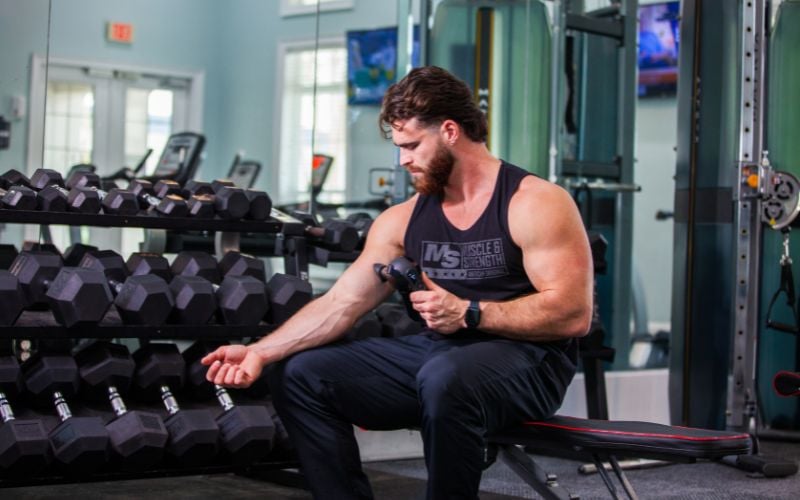
- Percussive therapy
- Extra sleep or naps
Proper sleep is your most powerful recovery tool during a deload.
Related: 3 Active Recovery Workouts for Your Next Rest Day
The 2-Week Deload Workout Plan
You’ll repeat the same four workouts both weeks, slightly increasing effort in Week 2.
- Week 1: ~50% effort
- Week 2: ~60% effort
If you ever feel challenged, reduce the weight. The goal is movement, not intensity.
Upper Body Workout A
| Exercise | Sets | Reps | Rest |
|---|---|---|---|
| Dumbbell Bench Press | 2 | 10-15 | 60 sec |
| Dumbbell Row | 2 | 10-15 | 60 sec |
| Arnold Press | 2 | 10-15 | 60 sec |
| Preacher Curl (any version) | 2 | 10-15 | 60 sec |
| Close Grip Push Up | 2 | 10-15 | 60 sec |
Lower Body Workout A
| Exercise | Sets | Reps | Rest |
|---|---|---|---|
| Goblet Squat | 2 | 10-15 | 90 sec |
| Stiff Leg Deadlift | 2 | 10-15 | 90 sec |
| Bodyweight Lunge (each leg) | 2 | 10-15 | 90 sec |
| Standing Calf Raise | 2 | 15 | 45-60 sec |
| Side Crunch (each side) | 2 | 15 | 45-60 sec |
Upper Body Workout B
| Exercise | Sets | Reps | Rest |
|---|---|---|---|
| Standing Dumbbell Shoulder Press | 2 | 10-15 | 60 sec |
| Dumbbell Pullover | 2 | 10-15 | 60 sec |
| Dumbbell Flys | 2 | 10-15 | 60 sec |
| Hammer Curl | 2 | 10-15 | 60 sec |
| Overhead Triceps Extension | 2 | 10-15 | 60 sec |
Lower Body Workout B
| Exercise | Sets | Reps | Rest |
|---|---|---|---|
| Deadlift | 2 | 10-15 | 90 sec |
| Dumbbell Squat | 2 | 10-15 | 90 sec |
| Barbell Hip Thrust | 2 | 10-15 | 90 sec |
| Seated Dumbbell Calf Raise | 2 | 10-15 | 90 sec |
| Lying Leg Raise | 2 | 10-15 | 90 sec |

Transitioning After Your Deload Phase
After completing this deload program, your body will be primed for your next strength or hypertrophy block. Start your new program at around 80-85% effort for the first week to reintroduce intensity safely.
Then, you’ll be ready to push hard and make new gains.
Recommended Workout Programs for Beginners:
- 3 Day Push/Pull/Legs (PPL) Workout for Beginners
- 8 Week Mass Building Workout for Beginners
- Super Strength: 8 Week Strength Building Workout for Beginners
Recommended Workout Programs for Intermediate/Advanced:
- 8 Week Mass Building Hypertrophy Workout
- The Total Package: A 3 Day Full Body Strength & Hypertrophy Workout
- Power Hypertrophy Upper Lower (P.H.U.L.) Workout
- Sculpted Strength: The Ultimate 12 Week Bodybuilding Program
Related: How To Choose Your Next Training Program (Plus Program Recommendations)
FAQ: Common Deload Questions
Can I do more sets or heavier weight?
No, that defeats the purpose. Pick one (slightly heavier OR extra volume), not both.
Should beginners take deloads?
Yes. Even beginners benefit from planned deload weeks after several weeks of hard training.
Can I take a deload mid-program?
Absolutely. If you feel fatigued or your performance dips, take a 1-week deload, then resume.
Can this be my regular workout?
No. This deload workout plan is meant for maintenance and recovery — not long-term progression.