Muscle & Strength Talks To The Beast Derek Charlebois

What is your athletic background, and how did you get involved with bodybuilding?
I originally became interested in bodybuilding at the age of 15 after watching Rocky IV. Stallone’s muscular and ripped physique along with the hardcore training montage made me say “I want to look and train like that!” At that point I began doing a dumbbell workout I got out of my dad’s Men’s Health magazine. After doing that program for a few weeks I was ready to step things up a notch. My uncle gave me an old bench,
With this new equipment I could now to a host of new
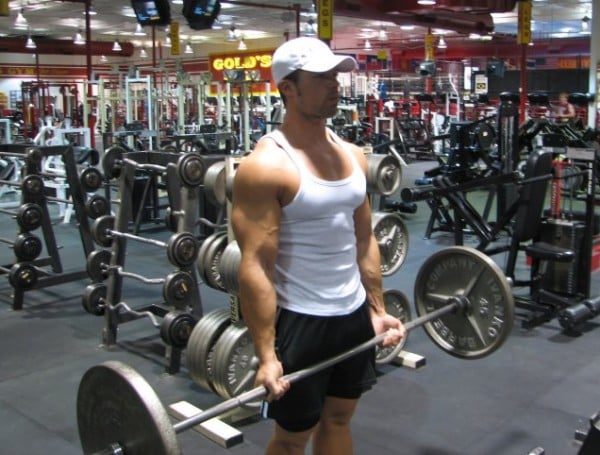
One thing about bodybuilding I really enjoyed while the process of learning how the body works. I would read everything I could get my hands on related to nutrition, physiology, biochemistry, etc. to further my knowledge of the body so I could apply it to my own programs. When I found out I could study exercise science in college it was a no-brainer to me that exercise science would be my major. While in college I started working for the supplement company Scivation and have continued to work for Scivation ever since. Now I get to help others reach their goals through my articles and books as well as creating awesome supplements with Scivation.
The thing I love most about bodybuilding is being able to push myself day in and day out to reach my goals. I love the fact that the progress I make lies solely in my hands. The harder and smarter I work the better my results will be. I love that there is always ways to improve in this never ending quest of self-improvement.
The thing I like least about bodybuilding is that every meal you eat influences your results. In other sports diet/nutrition is important, but a day of bad eating won’t set you back or affect your performance in an upcoming game the way it would affect your progress towards getting ready for a bodybuilding competition. I enjoy following a structured diet, but it would be nice if I could eat more pizza.
What are your future goals, dreams and plans?
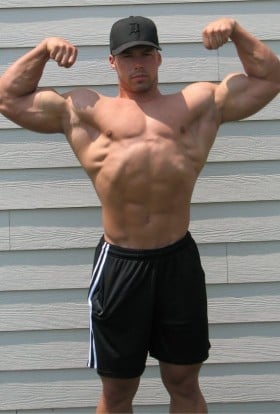
I have not competed since 2004. My goal since I started competing was to win the overall at the NPC Michigan Natural Bodybuilding Championships. In 2003 I won the men’s middleweight division and then the following year placed 7th in the light-heavyweight division. This year (2011) I plan on competing for the first time in 7 years and enter the NPC Michigan Natural Bodybuilding Championships once again with the goal of winning the overall title.
What does your current training and split look like, and what do you like most about it?
Right now I am doing a six workout rotation as follows:
Week 1
- Monday - Chest/Delts/Tris A
- Wednesday - Back/Traps/Bis A
- Friday - Leg A
- Saturday - Chest/Delts/Tris B
Week 2
- Monday - Back/Traps/Bis B
- Wednesday - Legs B
- Friday - Chest/Delts/Tris A
- Saturday - Back/Traps/Bis A
Week 3
- Monday - Leg A
- Wednesday - Chest/Delts/Tris B
- Friday - Back/Traps/Bis B
- Saturday - Legs B
With this setup I complete all workouts twice in a 3-week time span. Each week one of these muscle groups gets trained twice. I group the muscles together this way because they work together. Whenever you perform a pressing movement (
Over the years I have found that my chest, delts, and tris and with quads and hams respond well to heavy, low rep training (3-6 reps). While my back and biceps respond better to higher rep training (6-12 reps). Note I also perform some higher rep stuff for my chest, delts, tris, quads, and hams and do not solely train them in the 3-6 rep range.
How often do you perform cardio?
When bulking, I do HIIT cardio on my non-weight training days, usually two times a week. When cutting, I do steady state cardio post-weight training on training days AND HIIT cardio on my off days. So basically when I start cutting I add in cardio post-workout.
I am a fan of more intense cardio over low-intensity cardio. Even when I do steady state cardio I like to use the “interval” setting to increase the intensity. I think implementing sprints, sled pulling/dragging, battling ropes, running up stairs, and other forms of high-intensity cardio is a great way to burn fat.
How often do you change your training routine, and do you periodize your training?
I change my routine if I feel I am not getting results or I am bored. I don’t have set timelines like I am going to do this program for 12 weeks and then this program for 12 weeks, but instead go more by instinct. I am always experimenting with new techniques and strategies to find ways to accelerate results for both myself and my clients.
I do build some periodization into my routine, varying the volume and intensity of my workouts as that is a good way to ensure you are pushing yourself. If every workout is 3 sets of 6-10 reps and that never changes you are not taking full advantage of the types of overload and stimuli you can apply to enhance your results (i.e. varying the number of sets, rep ranges, etc.).
I do not feel that you have to change your exercise selection frequently. There is nothing that says your body stops responding to an exercise after X amount of weeks. I usually keep the same core group of
 What are your thoughts on fasted cardio?
Some people love and swear by fasted cardio, others are scared to death of it for fear of losing muscle. I personally am not a fan of fasted cardio. The reasoning behind doing fasted cardio is insulin levels are low and you will therefore burn more fat during the cardio session. The problem is when you wake up you are in a catabolic state (protein breakdown > protein synthesis). In my opinion boosting protein synthesis is more beneficial than potentially burning a little more fat during a cardio session.
If I was going to do cardio first thing in the morning I would down a scoop or two of whey protein upon waking and then wait 30 minutes or so before doing my cardio. By drinking the whey upon waking you can stimulate protein synthesis while keeping insulin levels lower. Another option, which a lot of people do and get good results from, is performing fasted cardio while sipping BCAAs like Scivation Xtend. So if you want to do fasted cardio I would definitely sip Xtend during the session.
Which do you prefer, and why…stead state cardio or HIIT?
If I could only choice steady state cardio or HIIT I would choose HIIT. My HIIT cardio sessions right now include both an interval portion and a steady state portion. I do intervals on the elliptical or bike and then I will do steady state cardio on the stepmill. HIIT training not only burns calories while you are doing it but also elevates your metabolism for longer AFTER you have completed it, so you are burning more calories throughout the rest of the day. Steady state cardio will also elevate your metabolism after it but not to the degree and duration that HIIT does.
How important is progression of weight in some form, in the muscle building process?
Progression of weight (gaining
This goes back to what I was talking about early with exercise selection, if you are constantly changing up the exercises you are doing you are not giving your body an opportunity to gain strength (neurological and muscular adaptations) on that movement and are not reaping the full benefits you could. For example, let’s say you switch up your exercises every 2-4 weeks. I feel gaining strength on
What are some of the most common mistakes made when someone is trying to build muscle and/or get ripped?
When it comes to building muscle, one of the most common mistakes people make is thinking they have to do 20 exercises per muscle group to “hit the muscle from all angles” to grow. Progressively increasing your strength on
I get emails all the time asking, “Is that enough exercises for my chest?” or “That doesn’t look like enough to grow.” I reassure them it is and then 8-12 weeks later I hear back from them and they say how great their results have been on the program. They probably got great results on the program because they were either doing too much before or not focusing on increasing their strength on compound lifts.
Regarding getting ripped, a common mistake I see if people going from 3,000-4,000 calories down immediately to 1,200-1,500 calories. I like to decrease my and my clients’ calories gradually based on their progress. If you are losing 2 lbs a week at 2,700 calories then there is no need to decrease your caloric intake until your weight loss stalls. Keeping your calories higher is better for muscle preservation, recovery, and your performance in the gym.
 What are some of your most and least favorite muscle building workouts approaches, and why?
I am a fan of Dorian Yates’ HIT principles, DC Training, and MAX-OT (not an exclusive list). The one thing all of these programs have in couple is a focus on intensity and progressively lifting heavier weights.
What are your favorite 5 muscle building exercises and why?
What are some of the biggest training mistakes you’ve made?
The biggest training mistake I made was not stretching and doing other injury prevention techniques when I was younger. I do a good amount of dynamic and static stretching along with foam rolling now and wish I was doing this when I was in my teens. I was one of those “I don’t need to stretch” guys. I figured I don’t stretch and I am not getting injured so why bother. Eventually I did start getting injured.
The main injuries that set me back were injuring my IT band in 2005 (from squatting heavily for many weeks in a row) and a lower back injury in 2006 (I am not sure of the exact cause). Before my lower back injury I could squat and
It was another two years after that before I could squat and deadlift again. I am pretty positive that both of these injuries could have been avoiding had I been stretching and foam rolling. Right now I am back to squatting and deadlifting 405 for reps, but I always wonder where I could be if I never hurt my back.
What are the most underrated and overrated muscle building exercises?
Underrated - machine pullover for the lats. I am a HUGE fan of pullovers for the lats. Machine pullovers take the
Overrated... I think all
If someone wants to connect with you, where can you be found?
You can find me on Facebook, my personal page is Derek Charlebois and my personal training page is Derek Charlebois’ Beast Mode Personal Training.
Derek Charlebois is certified personal trainer, competitive bodybuilder, and holds a Bachelor’s degree in Exercise Science from The University of Michigan. Derek is the Director of R&D at Scivation/Primaforce. Derek is an accomplished author with articles printed in various magazines and websites.
***For online personal training consultations contact Derek at beastpersonaltraining@gmail.com.