Road Warrior: Supplements For The Frequent Traveler

As road warriors, we don't have the luxury of carrying around a closet full of the latest supplements. The goal of this article is to outline supplements that benefit the Road Warrior, someone who travels frequently and may be living out of suitcases and hotels more often than their house or apartment.
Let's start with the following question: Should I buy powder or capsules if I travel on the road frequently?
Excellent question! I hesitate to make a blanket recommendation as it largely depends on the supplement in question. Here is a chart listing some pros and cons of powder versus capsule supplements.
Pros of powdered supplements
- If quantity of active ingredients is held constant, powder will be cheaper per serving
- If pre-measured before travelling, dosing on the road is as simple as pouring the contents of the supplement container in to liquid, mixing the product, and enjoying
- Can be stored in an airtight container such as a zip-lock baggie or screw-top cup
Cons of powdered supplements
- If you don’t pre-measure and don’t bring a scale with you, it’s relatively difficult to “eyeball” the proper dosing. Many scoops found in supplement powders, when filled to the top, are slightly larger than the recommended serving on the label. One way to avoid this mistake is to pre-weigh before travelling and eyeballing after that.
- Powders can be extremely messy if they accidently open up inside of your luggage
- Not all supplements are offered in powder form
Pros of capsule supplements
- Capsules offer a clean, non-messy way to dose a supplement without needing a scale to determine the proper amount of active ingredients
- Capsules can be measured quickly by counting with the human eye
- Can be stored in an airtight container such as a zip-lock baggie, screw-top cup, or pill container
- If capsules “spill”, the contents of your luggage are not likely to be ruined
Cons of capsule supplements
- If the quantity of active ingredients is held constant, capsules are more expensive per serving
- Not all supplements are offered in capsule form
- Some products, such as BCAAs, could require 10+ capsules to provide the same amount of Amino Acids as one scoop of a powdered BCAA product
*Disclaimer – If you’re a frequent flyer, and if possible, I would recommend keeping the capsules and/or powders in the original containers. Although I’ve never had any issues, the last thing you want to have happen as you’re going through security is to be pulled aside for nondescript pills or powders. If the original container is too large and you repackage the supplement, I would CLEARLY LABEL the contents and explain to the security agents that you’re a frequent traveler looking to stay healthy on the road. I’ve never met a TSA agent that didn’t understand how difficult it is to stay fit on the road.

The Must Haves
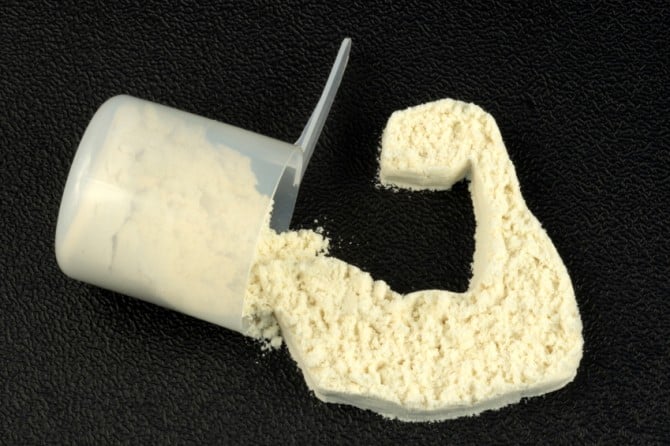
Protein Powder - What is it and why should I take it?
Protein one of the three macronutrients found in foods and is made up of amino acids. Protein powder is a dehydrated, granular form of protein that is made from one or more sources such as whey, milk, beef casein, soy, egg, hemp, wheat, or rice. Protein powder is a cost-efficient and convenient way to increase your protein intake, hunger, improve muscle recovery, increase lean mass, and control hunger.
How much should I take?
The guidelines below recommend protein intake based on your activity level and goals:
- If you are an athlete or highly active person attempting to lose body fat while preserving lean muscle mass, a daily intake of 1.5-2.2 grams per kilogram of bodyweight (0.68-1 grams per pound of bodyweight) is a good goal.
- If you are an athlete or highly active person, or you are attempting to lose body fat while preserving lean mass, then a daily intake of 1.0-1.5 grams per kilogram of bodyweight (0.45-0.68 grams per pound of bodyweight) is a good goal.
- If you are sedentary and not looking to change body composition, a daily target of 0.8 grams per kilogram of bodyweight (0.36 gram per pound of bodyweight) is a good goal.
Beyond 1 gram per pound of bodyweight, the law of diminishing returns kick in with regards to body composition benefits, but there aren’t significant negatives effects from protein consumption in the 1-2 grams per pound of bodyweight range; the excess protein is typically converted to glucose, which the body uses for energy.
Which is better - protein powder or protein bars?
Although slightly different in context, you could apply the pros and cons chart of powders versus capsules to this question.
Powders are typically cheaper per gram of protein, can be portion controlled by the user, and is typically less calorically dense than a protein bar. For what it’s worth, I’ve successfully flew weekly for the past 9 months carrying 5 to 15 baggies of whey protein with no issues. To be safe, I always clearly label WHEY on the baggie. I typically look for a protein powder with under 120 calories and 20+ grams of protein per serving.
Bars don't require a scale to portion out but are typically more expensive per gram of protein. They usually include added additional carbohydrates and fats to improve taste and consistency. Protein bars can also include added fiber, vitamins, and minerals, which are often not found in protein powders. I look for protein bars with under 300 calories and 20+ grams of protein (ideally 30+ grams) per serving.
Creatine - What is it and why should I take it?
Creatine is a natural chemical present in and made naturally by the body, but can also be obtained via food or supplement sources. Creatine supplementation can improve exercise performance, increase muscle mass, improve anaerobic cardiovascular capacity, and increase power output.
As road warriors we’re already presented with challenges related to diet, sleep, and activity, but creatine is great way to assist in performance in both weightlifting and cardiovascular activities. Creatine is NOT a steroid and WILL NOT cause kidney issues in healthy individuals who have a sufficient fluid intake.
How much should I take?
Creatine a supplement that can be conveniently dosed in either capsule or powder form. Below are common types of creatine and their recommended dosage.
- Creatine monohydrate loading protocol: take 0.3g per kilogram of bodyweight for 5-7 days, then continue taking 5g per day after the loading period
- Creatine monohydrate daily protocol: 2g per day to maintain average creatine stores
- Creatine ethyl ester – 4.5g per day
- Creatine nitrate – 1-2g per day
- Kre-alkalyn – 1.5g per day
Author’s Opinion. If creatine is taken daily, I personally do not see a reason to load unless you want to slightly expedite saturation levels; additionally, creatine monohydrate is the most cost efficient option as well as has the same efficacy as the more expensive creatine product.

Fish Oil - what is it and why should I take it?
Fish Oil, made of two primary omega-3 fatty acids, eicosapentaenoic acid (EPA), and docosahexaenoic acid (DHA), are important for numerous bodily functions including but not limited to: muscle activity, blood clotting, digestion, fertility, and cell division and growth. Adequate intake of Fish Oil may help to decrease blood pressure in people with high blood pressure, decrease inflammation, increase HDL (“Good”) cholesterol, decrease triglycerides.
As road warriors, we sit and eat frequently, so fish oil is an excellent way to combat the negative effects of a typical American diet, which is high in inflammatory, processed foods. Many active individuals find that supplementing with fish oil reduces Delayed Onset Muscle Soreness (DOMS).
How much should I take?
To maximize the benefits of fish oil, daily supplementation is recommended; it may takes days or weeks before significant benefits are noticed. The National Institute of Health recommends the following dosages:
- For high blood pressure and/or high triglycerides: Fish oil providing 2.04 grams of EPA and 1.4 grams of DHA per day
- For weight loss: Fish oil 0.66 grams of EPA and 0.6 grams of DHA per day
- To maximize general health and decrease DOMS, I’ve been supplementing with a combined 2.8g of EPA/DHA per day for over 3 years
Multivitamin - What is it and why should I take it?
A multivitamin is typically found in capsule form and offers a convenient way to increase the intake of vitamins and minerals that may be difficult to obtain from food alone. The contents of a multivitamin may differ slightly based on the manufacturer but it typically contains, at minimum, the following major vitamins and minerals: A, B, C, D, E, K, Iodine, Magnesium, Zinc, Copper, and Selenium.
A prolonged deficiency in any or all of the aforementioned vitamins and minerals may cause unwanted ailments, sicknesses, or diseases. A multivitamin is an excellent source of inexpensive “insurance” that especially comes in handy for road warriors who’s daily diet may vary drastically from day-to-day.
How much should I take?
Not all multivitamins are created equal! In an attempt to cut costs and corners, many multivitamin manufacturers include forms of the vitamins and minerals that are poorly absorbed by the body. Look for “chelated” minerals and don’t be afraid of products that that offer vitamins, specifically B vitamins, with more than 100% of your daily value. High doses of these water soluble vitamins will not have a negative effects in otherwise healthy individuals.
In terms of dosing, use your best judgment – if you feel like your diet is serious lacking then take the full dose recommended on the bottle, but if you feel that your diet is varied and above average in quality, consider taking half of the recommended dose (assuming it’s 2+ caps per serving).
Author’s Opinion – when I’m on the road I take full doses of the multivitamin, but when I’m home and have access to ample fruits and vegetables I cut my dosing to half the recommended amount.
Vitamin D - What is it and why should I take it?
In the words of comedian Jim Gaffigan "He's a pale fella. I didn’t think he’d be so pale". As road warriors we spend a majority of our days indoors either travelling inside planes, trains, and automobiles or staring at computer screens inside offices and/or hotels.
The two main ways to obtain vitamin D are by exposing bare skin to the sun and orally with vitamin D supplements. Proper vitamin D levels in the blood have been shown to decrease the risk of cardiovascular disease, decrease blood pressure, decrease bone fracture risk, and improve mood.
How much should I take?
Via Skin Exposure. According to the National Institute of Health, “sensible sun exposure (usually 5-10 min of exposure of the arms and legs or the hands, arms, and face, 2 or 3 times per week)”. When obtaining vitamin D via skin exposure, consider the following: the time of day, where you live, the color of your skin, and the amount of skin you expose.
Via Supplementation. For most road warriors, consider supplementing with 1,000-2,000IUs of vitamin D per day. Preferably use Vitamin D3 as it is absorbed more effectively in the body compared to Vitamin D2.
Vitamin D is a fat soluble vitamin so taking your vitamin D with a small source of fat, such as fish oil or with meals.
Author’s Opinion – I supplement 5000 IUs daily, but I have pale skin, live in the Northeast, and have low vitamin D levels.
Sleep Enhancers - What is it and why should I take it?
In this context, sleep enhancers are over-the-counter (OTC) supplements designed to help the user relax, cope with stress, fall asleep, and maintain normal circadian rhythms. Common sleep enhancers include: Melatonin, 5-HTP, Valerian Root, and L-Theanine.
For road warriors, I highly recommend trying one or more of the aforementioned sleep enhancers. With the crossing of time zones, stressors of travel and attempting to sleep in unfamiliar beds such as those found in the hotel (there’s no place like home!), the ability to relax and sleep can seem like a daunting task.
Lack of sleep has been shown to negatively impact healthy brain function, emotional well-being, decision making, response time, and overall physical health.
How much should I take?
The dosing of these supplements depends on the product in discussion but here are some recommendations:
- Melatonin – 0.3-5mg at bedtime
- 5-HTP – 300-500mg (Consult with your physician if you intend to take 5-HTP buy currently take drugs prescribed for antidepressant or cognitive purposes)
- Valerian Root – 450mg an hour before bed
- L-Theanine – 100-200mg before bed
Author’s Opinion - I take 200mg of 5-HTP before bed every night.
Essential Minerals Magnesium and Zinc - What is it and why should I take them?
Magnesium and Zinc are two essential dietary minerals for active road warriors as they are lost through sweat and are not typically found in adequate dosages in multivitamins. Magnesium deficiencies are common in developed countries and such deficiency can increase blood pressure, increase blood glucose levels, and decrease insulin sensitivity. Zinc deficiencies can decrease testosterone, increase acne, and increase blood glucose levels.
How much should I take?
- Magnesium – 200 to 400 mg per day, preferably with food. The cheaper forms of magnesium such as magnesium oxide or magnesium chloride may cause diarrhea and bloating due to their poor absorption
- Zinc – 5 to 45mg per day depending on whether you’re supplementing to maintain or increase zinc levels
- Author’s Opinion - I take 400mg of Magnesium Citrate and 30mg of Zinc per day
The Could Haves
Caffeine - What is it and why should I take it?
Caffeine is a stimulant found in foods, beverages, and pills that can increase anaerobic running capacity and power output in healthy, active individuals. Excessive intake of caffeine can increase blood pressure, heart rate, and cortisol (re: stress hormone) levels.
As a road warrior, we wake up at 5:00am or earlier to catch a Monday morning flight, put in 12+ hour days at the client site, and endure a multi-hour commute back to our residence on Thursday evenings. Caffeine, when used in moderation, can help us to stay awake, alert, and productive during these long days.
How much should I take?
The dosing of caffeine largely depends on your goals, frequency of planned caffeine intake, and physiological response to caffeine. Please note that the numbers below are starting points and must be adjusted up or down depending on your needs.
- New caffeine user – 100mg dose
- Fat burning – 200mg dose
- Strength increase – up to a 500mg dose
It is recommended to decrease or abstain from caffeine for a few weeks if you feel “addicted” to caffeine.
Author’s Opinion – I take 200 to 300mg of caffeine 30 minutes pre-workout, but I have spent years determining the optimal dose for me. When in doubt, start small and increase slowly as you see necessary.

Adaptogens - What is it and why should I take it?
Adaptogens are plants that can help combat the negative effects of stress and fatigue by increasing concentration, performance, and endurance. As road warriors, we’re constantly bombarded with high-stress environment and scenarios such as travelling and making flight connections, sleeping in unfamiliar locations such as hotel beds, and being under the scrutiny of both the client and the company we represent during presentations.
How much should I take?
As far as dosing, adaptogens should be dosed on the lower end and adjusted based on your response as well as the current or forecasted levels of stress and fatigue you are or could be facing. With the above in mind, typical doses for popular adaptogens are as follows:
- Rhodiola rosea – 170 to 185mg per day, which supplies ~4.5mg of the active ingredient “salidroside”
- Ginseng (specifically Panax Ginseng) - 1 to 2 grams of raw herb, or 200 mg daily of an extract, which supplies 4% to 7% of the active ingredient “ginsenosides”
- Tribulus Terrestris – 5 to 6 grams of root powder or 200 to 450mg of Tribulus Terrestris extract which supplies 60% of the active ingredient “saponin”
- Bacopa Monnieri – 300mgof Bacopa Monnieri extract which supplies 55% of the active ingredient “bacoside”
- Holy Basil – 500mg of Holy Basil leaf extract taken 2 times per day
- Ashwagandha - 1 to 2 grams of Ashwagandha root boiled in milk or water for 15-20 minutes and consumed 3 times per day and preferably with meals
Some people enjoy combining adaptogens as each may affect an individual differently.
Greens Food - What is it and why should I take it?
Greens food supplements is a generic name given to a class of supplements that dehydrate, grind up, and combine one or more of the following: fruits, vegetables, adaptogens, and digestive aids such as probiotics and fiber. Greens food supplement are typically offered in powder form, but some companies offer pill form, but the equivalent dose could be 5 caps per 1 powder scoop. Greens food supplements can supply trace minerals, iron, and fiber as well as significant levels of Vitamin A, B, and C depending on the product.
As road warriors, find and consuming fresh fruits and vegetables can be an expensive and difficult, if not monumental task. Although nothing replaces high quality fruits and vegetables, greens powders offer a bit of nutritional “insurance” or “back-up” and you can easily travel with a powdered greens formula.
How much should I take?
Since the ingredients of greens food supplements vary, I would recommend reading and following the label instructions. Most labels recommend taking one dose per day, but if feel like your diet is seriously lacking that day, I believe 2 doses would be acceptable in otherwise healthy individuals.
Please DO NOT uses a greens food supplement as a substitute for regularly consuming fresh fruits and vegetables. Greens food supplements are excellent in a pinch and in addition to a healthy diet.
Pre-workout Formula - What is it and why should I take it?
A “pre-workout” formula refers to a singular or any combination of products taken prior to exercise to increase power output, muscular strength, muscular endurance, and resistance to fatigue. Many companies offer pre-formulated pre-workouts, but some people prefer to make their own formula by buying, weighing, and combining various bulk powders.
As road warriors, we have to make a conscious and significant effort to take time for caring for our bodies and health. It’s far too easy to sleep in until the last possible minute or go to a happy hour post-work instead of working out. Pre-workout formulas can provide that extra energy boost to get you out of the bed in the morning or to power through a workout after working a 12 hour day at the client site.
There are a few major points to consider regarding pre-workout formulas:
- Powder versus capsule – most singular doses of pre-workouts can easily and conveniently be dosed using a powder or capsule
- Caffeine/Stimulant content – if you’re working out close to bed time, it might be worth considering a caffeine- or stimulant-free pre-workout. Taking stimulants such as caffeine too close to bed time could prevent you from falling asleep and decrease sleep quality
- Creatine content – if you’re already taking creatine in pill or powder form, you may not need the additional creatine found in some pre-workout formulas; if you decide on a pre-workout formula that has creatine, considering dialing back your creatine supplementation from other sources accordingly
Digestive Health - What is it and why should I take it?
As road warriors, being adequately hydrated and consuming sufficient amounts of fiber are not always enough for maintaining a healthy digestive tract. Digestive health supplement can help with the absorption of nutrients from food in the stomach and intestines, help minimize gas and bloating, and help regulate the excrement of waste from the body.
Many times, greens food and digestive supplements to increase convenience and decrease cost for the consumer. The drawback of combining these supplements is that you cannot individually dose specific ingredients unless you buy additional powders or capsules.
How much should I take?
Typical doses for popular digestive health supplements are as follows:
- Fiber Powder (such as Psyllium Husk) – used to increase excrement volume; 5 grams taken alongside meals and liquid, once to three times per day
- Probiotics – refer to directions on the supplement label and start with one full dose per day and increase up or down depending on response. May include one or more of the following: Lactobacillus acidophilus, Bifidobacterium lactis, Lactobacillus brevis, Lactobacillus casei, Lactobacillus plantarum, Lactobacillus rhamnosus, Lactobacillus salivarius, Lactobacillus paracasei, Lactobacillus bulgaricus, Bifidobacterium bifidum, Bifidobacterium brevis, Bifidobacterium longum
- Digestive Enzymes – refer to directions on the supplement label and start with one full dose per day and increase up or down depending on response. May include one or more of the following: Papain, Bromelain, Amylase (to break down carbohydrates), Lipase (to break down fats), Lactase (to break down milk sugar), Pancreatin (to break down protein), Cellulase (to break down fiber)
- Ginger – used to increase digestion speed; 1 to 3 grams of ginger extract per day; one 8 ounce cup of ginger ale made with ginger root; 4 cups of ginger tea steeped for 5 to 10 minutes with ½ teaspoon of grater ginger per cup
- Betaine Hydrochloride (HCL) – used to increase the acidity of stomach acid; consume 650mg per meal with protein and adjust up or down accordingly depending on how your stomach feels; some people take three 650mg tablets per meal and pepsin appears to work synergistically with Betaine HCL.
Branched Chain Amino Acids (BCAAs) - What is it and why should I take it?
BCAAs are made up of the following amino acids: Leucine, Isoleucine, and Valine. Adequate BCAA intake will increase muscle growth and repair (over time), prevent fatigue, and decrease muscle soreness. The law of diminishing returns will kick in if you consume additional BCAAs above and beyond a daily dietary protein intake of 1-1.5 grams per kilogram of bodyweight.
Pure BCAAs products have no additional carbohydrates or fats but due to the isolation process, they’re typically significantly more expensive for the same amount of “total protein” compared to protein powder products.
Author’s Opinion – as a road warrior with limited luggage space, I would recommend supplementing with a complete protein source such as protein powder before investing in BCAAs.
How much should I take?
The below guidelines are a starting point but can be adjusted based on your dietary protein intake and budget:
- Leucine – 2 to 10 grams per dose
- Isoleucine – 48-72 milligrams per kilogram of bodyweight in a non-obese person
- Valine – 20 milligrams per kilogram of bodyweight