Optimizing Insulin Sensitivity for Muscle Gain and Fat Loss

Bodybuilding is one of the toughest sports there is to train for. It's not for the casual trainee. It’s a constant and grueling uphill battle filled with dedication and determination.
Training, nutrition, supplementation, rest, and recovery must be planned out seven days a week, 365 days a year. The only goal is to maximize muscle while stripping bodyfat to single-digits; bodybuilders have chosen to pursue an extremely difficult and testing lifestyle.
One of the toughest parts of bodybuilding is finding the balance between shredding and building at the same time.
So how do you find that perfect balance between massive and cut? Fortunately there are a few often-overlooked, but simple tricks; they are unquestionably the most important things any serious lifter must to do – the surprisingly simple steps to radically improving your insulin sensitivity!
Developing a lean, muscular physique without first taking into account the many ways insulin sensitivity can be improved is like trying to run a marathon with no aerobic conditioning: you will fail. Insulin sensitivity is one of the crucial parts of bodybuilding to go the distance and developing a head-turning appearance.

Insulin Sensitivity
The regulation of blood sugar is one of the most important bodily processes for both general health and wellbeing, and muscle-building. Blood sugar is regulated through the pancreas, which secretes insulin whenever a certain amount of sugar is detected in the blood. Once released, insulin stimulates the absorption of sugar into muscle and fat cells; think of insulin like a key that opens the door for glucose.
Decent insulin sensitivity encourages muscle glycogen replenishment (glycogen stores energy), but insulin resistance, on the other hand, promotes fat storage1 as well as a host of additional negative effects – all of which make muscle-building more difficult: chronic inflammation, lethargy, poor recovery, extended muscle soreness, increased triglycerides (a precursor to heart disease), sleep apnea, nerve problems, and, if unchecked, diabetes (and the numerous complications inherent in this disease).
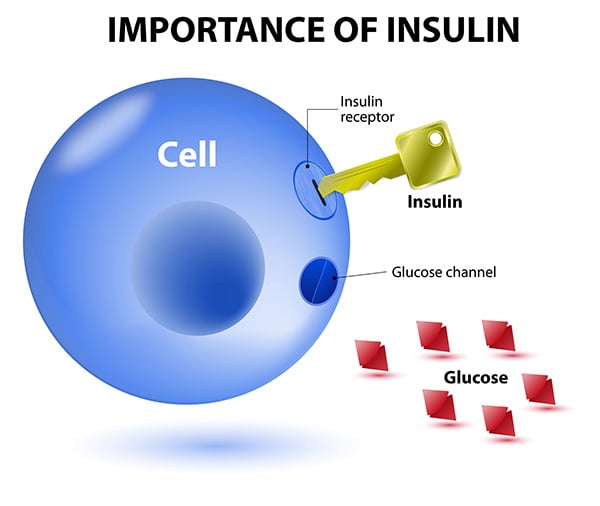
Insulin sensitivity is defined by how much insulin is needed to store glucose (blood sugar) within the cells of the body. While insulin sensitive folk need only a small amount of insulin to store excess blood glucose, resistant individuals need much more to store the same quantity of glucose.
If you have a low sensitivity to insulin then you’re going to have an excess of glucose in your blood. This means more insulin needs to be pumped out to try and get that excess glucose out. But even though insulin is great for nutrient storage and, as a transporter of amino acids to muscle tissue, when it’s increased beyond what is needed for good health, it will result in fat storage and the other consequences previously mentioned.
Good insulin sensitivity means good health.
Bodybuilding Cornerstones
Improving insulin sensitivity is essential both when bulking and during a shredding phase. Increasing insulin sensitivity has traditionally been achieved through the bodybuilding cornerstones of optimal nutrient timing and hardcore training. Optimal nutrition maximizes the uptake of glucose and amino acids into muscle to speed healing and enhance energy levels.
Let’s face it, what maximizing Insulin Sensitivity really does is to create an environment of Nutrient Partitioning. What does that mean? Basically, it’s a matter of conditioning your body to shuttle nutrients to muscle and away from fat storage; essentially, it’s the holy grail of bodybuilding!
You know the deal: 6-7 small meals per day supplying specific macronutrient ratios based around activity levels, genetic predisposition and other individual factors.

Other general advice to boost insulin sensitivity includes the addition of higher volume, high-intensity resistance training, easily achieved by a majority of today’s bodybuilders – muscles demand glucose both at rest and, especially, when forced to contract; meaning, trained muscle cells are more insulin sensitive than those that are not.
Proper nutrient timing and intensive weight training will, significantly improve insulin sensitivity. This creates the ideal environment for Nutrient Partitioning at its best!
Okay so you know how to eat and you know how to train, insulin sensitivity should be at its max right? Wrong! There are still a few more things that you can do to boost your insulin sensitivity even further. Here are four additional, though undervalued, ways to do just that.
1. Increase Cardio
Age and genetics are frequently cited as leading causes of insulin resistance. But anyone, regardless of their individual circumstances, can improve insulin sensitivity. Of the many modifiable factors that can help jack up insulin sensitivity, cardiovascular activity has achieved top tier status. Unfortunately, however, many bodybuilders are conditioned to avoid cardio lest they lose precious muscle. Bad move.
When done in combination with resistance training (especially on non-weight training days to ensure some form of exercise is done at such times and so as not to deplete training energy), cardio can further increase the uptake of glucose into cells.6,7 Vigorous sessions of more than 30 minutes appear to be more effective than lower intensity, low volume methods.3

The key to preserving muscle mass while enjoying increased insulin sensitivity via cardio training is to incorporate cardio 4-5 times per week, 30-60 minutes per session (HIIT fans can substitute 1-2 HIIT sessions), while closely monitoring strength levels and lean muscle gains. Modify your personal cardio schedule to ensure you are gaining on all fronts.
Related: A Scientific Look at What Kind of Cardio is Best for Fat Loss
2. Antioxidant Timing
We all know how important antioxidants are for boosting immunity and indirectly increasing muscle gains. But as with most things bodybuilding, to get the most from our antioxidant intake, proper timing is essential.
Many bodybuilders are into the habit of throwing down a cocktail of pills post-workout – this author included. But some research has shown that antioxidant vitamins C and E, when taken post-workout, can potentially eliminate the insulin-sensitizing effects of exercise.4, 5 To be safe, take your vitamins in the morning, or an hour or more before/after working out. The most effective ratio of antioxidants can be found in multi-pill vitamin stack packs from many supplement companies.
3. Maximize Carbohydrates
Carbs are essential for energizing workouts, allowing protein to work its muscle-building magic, and providing valuable micronutrients to encourage muscle repair and general health maintenance.
Related: How To Use Carb Cycling to Lose Fat or Build Muscle
Most bodybuilders know to avoid the so-called bad carbs (high simple sugar types) while emphasizing clean, complex varieties. However, even the best carb choices (oats, brown rice, sweet potatoes) can result in excess blood sugar, which, over time, may lead to a decrease in insulin sensitivity – especially in the offseason when caloric intake is increased.
One way to help solve this dilemma is to include insulin sensitizing foods with higher carb meals.2 Among the best of these foods is vinegar. Vinegar helps to shuttle carbs into muscle and away from fat storage. Cinnamon, turmeric, green tea, pickled foods (for example, kim-chi and sauerkraut) and nuts (in particular, walnuts and almonds) also help to improve insulin sensitivity when eaten with high carb foods.

4. Supplement for Success
The many benefits of supplementation for improved physical performance and muscular development are numerous. For the purposes of improving insulin sensitivity specifically, four products should top the list of every dedicated lifter: omega 3 fatty acids, magnesium, R+ Alpha Lipoic Acid (ALA), and a post-workout protein/carbohydrate formulation. Most ALA products are a 50:50 mixture of R and S isomers. Look for the R+ form specifically; it is the biologically active form.
- Omega 3s: by reducing the intake of trans-fats, reducing the consumption of omega 6 vegetable oils such as canola, safflower, corn and cottonseed, limiting saturated fats, and increasing omega 3 fatty acids (for example, fish oils), a fat balance conducive to increasing insulin sensitivity can be achieved. An increased intake of healthy fats as part of an optimal dietary fat balance will strengthen the outside lipid layer that both protects cells and makes cells more sensitive to insulin.2
- Magnesium: considered to be a natural insulin sensitizer, magnesium has been scientifically proven to improve insulin sensitivity and glucose tolerance.
- R+ Alpha Lipoic Acid: one of the most important antioxidants for improving insulin sensitivity, R+ ALA is currently being used by supplement savvy bodybuilders to significantly enhance nutrient storage and optimize insulin activity.4 Recommended dosages range from 300mg to 600mg daily, ideally separated into 2 to 4 150mg dosages.
- Post Workout Protein/Carb Forumla: while post-training antioxidant intake is to be avoided, as discussed earlier in this article, protein and carbohydrate replenishment at such times remains an essential part of recovery. By consuming rapidly-digested proteins and carbs before the sweat from your workout has dried, both glycogen storage and protein synthesis are vastly increased given insulin sensitivity is at its highest and muscle cells are most receptive to nutrient storage at this time.

A Muscle Building Foundation
Before upping training intensity, before increasing the duration and quality of sleep, and before increasing protein intake, a smart bodybuilder will always take into consideration whether they are doing all they can to enhance insulin sensitivity.
Through a combination of advanced supplementation, nutrient timing, the inclusion of specific insulin sensitivity-enhancing foods, and tailored training strategies, insulin output can be controlled in a way that will advance bodybuilding progress.
By making muscle cells more receptive to nutrient storage, both fat loss and muscle-building will instantly be improved.
References
- Bastard, J., P. et al Recent advances in the relationship between obesity, inflammation, and insulin resistance . Eur Cytokine Netw. (2006)
- Poliquin Group. Nine things that improve insulin sensitivity: accelerate fat loss and build musclefaster.[Online]http://main.poliquingroup.com/ArticlesMultimedia/Articles/Article/1267/N... - retrieved on 29.12.15
- Rachael N., et al. Daily physical activity predicts degree of insulin resistance: a cross-sectional observational study using the 2003-2004 National Health and Nutrition Examination Survey. International Journal of Behavioral Nutrition and Physical Activity. (2013)
- Roussell, M. four ways to jack up insulin sensitivity. [Online] https://www.t-nation.com/supplements/four-ways-to-jack-up-insulin-sensit... - retrieved on 29.12.15
- Ristow, M., Zarse, K., Oberbach, A., et al. Antioxidants prevent health-promoting effects of physical exercise in humans. Proceedings of the National Academy of Sciences of the United States of America 2009; 106:8665-8670.
- Van der Heijden, G., J. et al. Aerobic exercise increases peripheral and hepatic insulin sensitivity in sedentary adolescents . J Clin Endocrinol Metab. (2009)
- Winnick J., J. et al. Short-term aerobic exercise training in obese humans with type 2 diabetes mellitus improves whole-body insulin sensitivity through gains in peripheral, not hepatic insulin sensitivity . J Clin Endocrinol Metab. (2008)