3 Fitness Trends that Need to Die

We live in a world where what’s “trending” is what everyone follows – even if the trend only lasts a couple of short months. Unfortunately, that catatonia has spread beyond the confines of popular culture, and has made its way into fitness and health.
When it comes to exercise, as the fitness revolution continues to pick up steam, so do its going trends. In the 80’s and 90’s, aerobics classes were the premier way to lose body fat and train for a lean body. In the mid 2000’s, the BOSU ball was the most popular piece of equipment in the gym.
Today, training has become slightly more sophisticated in realizing that the general population needs to focus on long-term health and functionality.
Like it or not, that means that training the body to become stronger simply must make its presence known in a given training program. From that, it means many once-popular methods (like the BOSU) have to take back seat compared to traditional barbell training against heavy resistances.
The thing is, in most cases, the intent is good. But as you’ll see, many take an extremist approach to whatever they get into, which only leads to their detriment.
In the time I’ve spent as a strength coach, it’s hard to think I haven’t seen it all, but I’m sure it’s just the beginning. Of all things, these are the trends that really make me raise an eyebrow.

Trend 1: Sport Performance Training
It doesn’t help that most of us watch professional sporting events, the business of which takes over the actual sport itself. The amount of propaganda that goes into these players and their endorsements, training, and everything else is uncanny.
Over the years there has been a hype surrounding international competitions like the Olympics, Pan Am Games (which just happened), World Cup, or Commonwealth. Along with the hype comes commercials, interviews, and other media-savvy methods to engage the viewers.
You can be sure the media will show clips of the most advanced lifting methods, technical plyometric exercises, and elaborate movements to showcase immense levels of athleticism and training difficulty.
Unfortunately, you can be sure the masses will follow.
For some reason, people seem to think this is the type of training they need, and start mimicking their idols, failing to acknowledge 2 key points:
- They’re not athletic enough to require or benefit from this level of advanced training methodology.
- The clips of training broadcast over mass media from these athletes, likely doesn’t comprise even half of their actual training.
A good strength coach knows that the order of the day for a pro athlete is to ensure he’s capable of moving well using primal movement patterns, getting (or staying) strong while doing so, and preventing injury in-season.
Acquiring more skills that are sport specific largely comes from skill-based drills and practicing the sport itself.
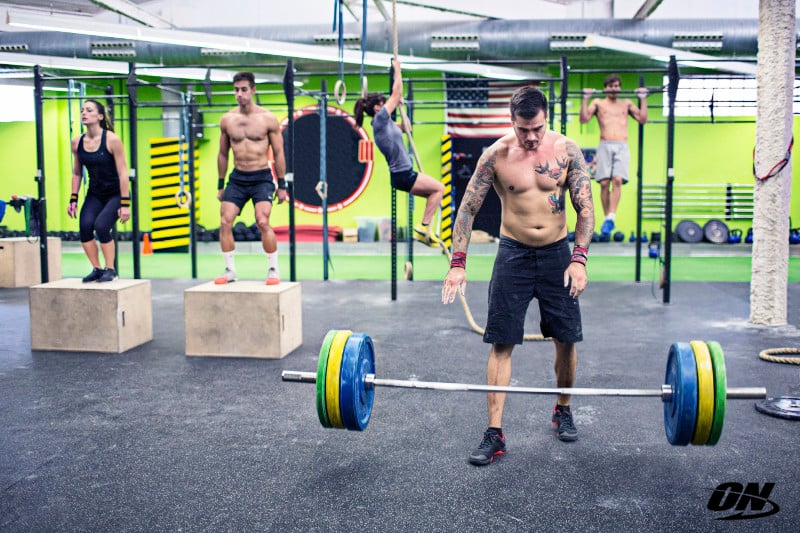
When looking for “change” or added challenge to your current lifting program, it’s important not to get caught up in the Kool – Aid and think you no longer have any need for the basics.
There are many ways to shake your program up without sacrificing important primal movement patterns:
- Play with your rep scheme, tempo, volume, or rest interval.
- Change your goals from max strength emphasis to muscular endurance.
- Take a phase to improve your overall mobility.
In the end though, just remember what’s truly important.
Trend 2: CrossFit Training
It’s important to note that CrossFit as a brand, and as a training methodology is evolving.
The choice of exercises, for the most part, can’t be knocked. The popularization of barbell training and compound movements in the last 6 or so years is largely thanks to them.
It’s helped women to start lifting weights as their primary source of exercise, and it’s made many aware that squats and deadlifts are two of the most important things you can do in the weight room.
The problem comes in the fact that this training method is viewed as (and argued to be) a sport.
When you add the word “sport” into the mix, you immediately associate that with key words like “competition”, “team”, “win” – all of which shouldn’t really be associated with someone who’s training to improve their fitness.
Many people think CrossFit – and the community that comes along with it – is right for them despite poor conditioning or a lack of foundational movement that may go unnoticed depending on the training center the lifter decides to join when getting started.
My concern is toward the mentality for someone whose mind hasn’t been conditioned by training for long enough. Basically, dropping yourself into a ‘beat-the-clock’ and ‘beat-your-competitors’ mindset as the goal of training is unhealthy for someone just starting out.
They should be learning that training should be blind to anyone around them, where personal skill development is the main focus. From that come physical and performance-based results.
Workouts shouldn’t be conquests, nor should they be viewed as such.
Trend 3: Powerlifting Training
Before you read the subheading title and start losing your mind, remember that I’m referring to extremism surrounding these topics.
Traditional powerlifting training requires its competitors to focus on the squat, bench press, and deadlift as primary disciplines. Assistance exercises are added to their training with the intention of improving the performance and strength of those lifts.
That’s fine for someone who’s intent in competing in powerlifting meets – but once more, what happens to the mind of the average person who idolizes competitive powerlifters and is heavily influenced by their training styles?
I’ve seen it many times – lifters who forego muscle stimulation or perfect form for the sake of a big lift, lifters who push their programming variety and conditioning to the backburner for the sake of low rep training, or lifters who let “powerlifting training” be an excuse to get fatter for the sake of new PRs.
If you’re not serious about powerlifting, it can be a lazy man’s scapegoat in disguise and an easy trap to fall into. Don’t let it happen to you!
Summary
I could have mentioned a number of other training methods that are “trending” as we speak. These three were the most prominent on the radar, from my perspective.
We have to remember to stop missing the forest through the trees and add some insight and balance to the things we do in the gym.
As I mentioned earlier, all training protocols are well intentioned and designed to improve health and performance. However, it’s up to you to decide how you apply it all, and whether or not you keep it as a tool in your toolbox.